
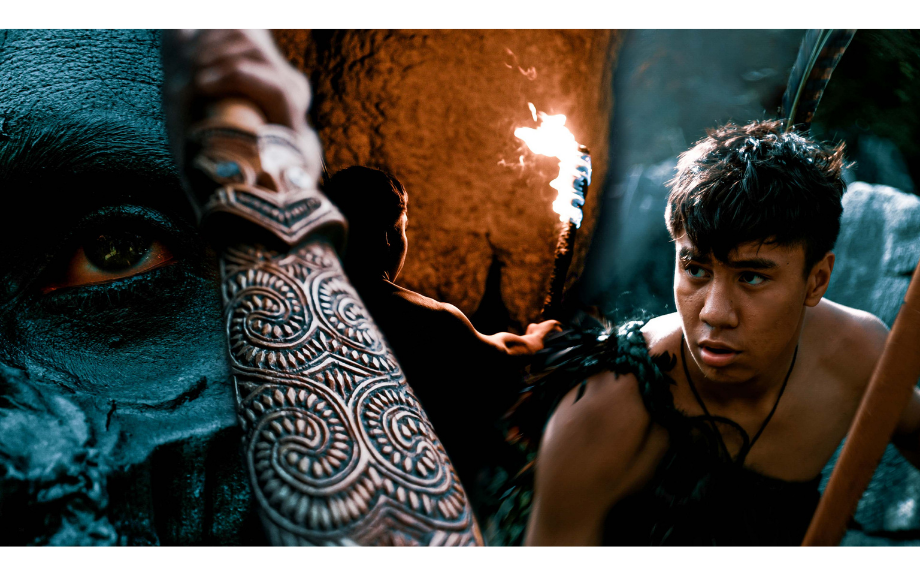
Alien Weaponry release second album into ‘a very different te re Māori environment’
It’s Te Wiki o Te Reo Māori and, like many New Zealand Acts, ‘te reo Metal’ band Alien Weaponry is releasing a new album this week. However, even though half the songs on Tangaroa are in te reo Māori, the release date for their sophomore album wasn’t planned around this week, or even around the month of Mahuru Māori.
It’s Te Wiki o Te Reo Māori and, like many New Zealand Acts, ‘te reo Metal’ band Alien Weaponry is releasing a new album this week. However, even though half the songs on Tangaroa are in te reo Māori, the release date for their sophomore album wasn’t planned around this week, or even around the month of Mahuru Māori.
“It’s pretty cool that it has worked out this way,” says lead singer and guitarist Lewis de Jong (Ngāti Pikiao & Ngāti Raukawa), “but the album release was actually planned to coincide with our international schedule, as we are touring the USA with Gojira in October and November.”
Having released their first album, Tū, in June 2018 and toured overseas for much of 2018 and 2019, the band has observed a huge change in how te reo Māori is being used and received in NZ music and the media in the intervening three years.
“When we released Tū, it was definitely unusual to have songs in te reo Māori, and we were really nervous about how it would be received,” says drummer Henry de Jong (Ngāti Pikiao & Ngāti Raukawa). “This time, with so many mainstream artists translating their music into te reo Māori, it almost seems like English songs are in the minority.”
While the Māori voice in Aotearoa is growing strong, Alien Weaponry have also found that there is nothing to be feared from releasing their music in te reo Māori across the globe. Kai Tangata, the biggest hit off Tū, is a 7-minute anthem entirely in te reo Māori, with millions of streams on Spotify and 12 million views on YouTube.
Some Kiwi fans have questioned why Alien Weaponry appear to have been excluded from initiatives like the Waiata Anthems project, but there is a simple explanation, laughs Henry.
“Waiata Anthems was set up to as a platform to create te reo Māori versions of popular English songs. And since our songs are already in te reo Māori, we just don’t fit that format.”
Lewis adds, “People have suggested we translate some of our English songs, but for us the language we use in our songs is part of the emotion and ideas we are trying to express, and we feel fortunate to be able to make that choice ourselves.
While the band has a huge international fan base – they were called ‘The Future of Metal’ by UK-based Metal Hammer magazine and their music is played regularly on stations like Sirius XM across the USA; they have yet to feel the love from local mainstream radio.
“We’ve always had great support from Radio NZ, iwi and student stations, but with the groundswell of support for te reo Māori from just about every other part of the NZ music and entertainment industry, we’re hoping this year will be the year that even the big rock stations in NZ will turn a corner and playlist our Māori songs. Mahuru Māori would be a great time to start,” says Henry.
Tangaroa will be released at midnight on Friday 17 September, followed by a new music video for Hatupatu – a song based on the story of the band’s Te Arawa ancestor, Hatupatu, and his escape from the fearsome bird-woman Kurangaituku.
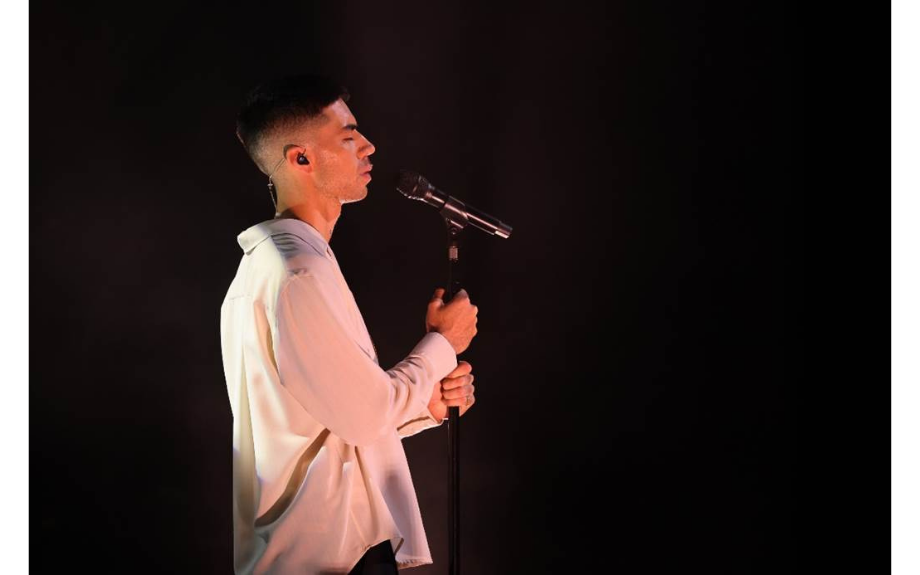
TEEKS SHARES ‘FIRST TIME’ LIVE AT THE CIVIC
Teeks (Te Karehana Gardiner-Toi) shares a sublime version of ‘First Time’, performed live at The Civic, Auckland onboard the chart-topping Māori artist’s ‘Something To Feel’ New Zealand Tour.
Teeks (Te Karehana Gardiner-Toi) shares a sublime version of ‘First Time’, performed live at The Civic, Auckland onboard the chart-topping Māori artist’s ‘Something To Feel’ New Zealand Tour. The landmark show held on one of the city’s most iconic heritage stages, saw the celebrated performing artist bare his soul to a sold-out audience.
“Teeks has an uncanny knack for singing with a gravitas that makes you feel like you are in a stadium, but at the same time as if he is singing for you and you only” – New Zealand Herald
“His ballads, like soothing balms for heartache, and his stage presence, endearing and utterly likeable, are universally appealing – and his motley crew crowd are a testament to that” – Stuff
A fan favourite from his debut #1 album and on board the six-date national tour, which saw sold out venues in Auckland, Christchurch and Wellington, ‘First Time’ has captured hearts outside of Aotearoa, becoming somewhat of a favourite for a newly burgeoning fan base in South Africa. Over the weekend, the video has soared with over 20,000 views.
The track took off when shared by South African actor Natasha Thahane to her 2.4 million Twitter followers, where it went on to top South African streaming charts and gained supportive airplay across the country’s airwaves, hitting #1 on South African iTunes single chart, #2 on South African Apple Music, and clearing South Africa’s Spotify Top 20. Additionally, the song has had over 35 million views on TikTok.
Teeks rides the wave of ‘Something To Feel’ with nominations for Best Māori Solo Artist Award, Best Māori Songwriter, Best Māori Pop Album and Best Music Video (‘Younger’) at this year’s Waiata Māori Music Awards
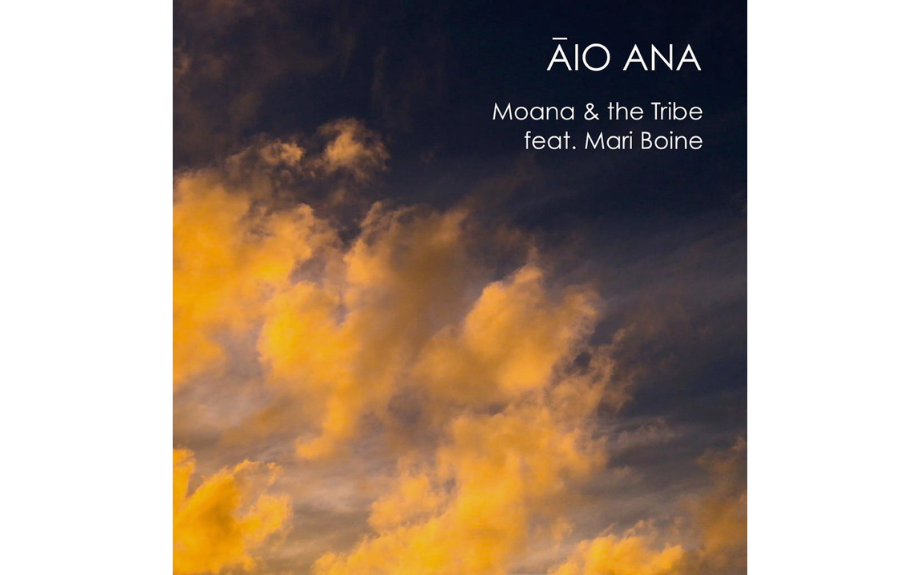
Moana & The Tribe Release New Song ‘Āio ana’ feat. Mari Boine
Āio ana’ is a song of peace; a lullaby for some, a meditation for others. It is the fourth track from the upcoming album Ono by Moana & The Tribe.
Āio ana’ is a song of peace; a lullaby for some, a meditation for others. It is the fourth track from the upcoming album Ono by Moana & The Tribe. Due for release in 2022, Ono comprises six unique songs that celebrate and raise the visibility of endangered indigenous languages.
The reo lyrics of ‘Āio ana’ were penned by Scotty Morrison, with music written by Paddy Free and Moana Maniapoto. The Sámi language of Northern Europe is the contribution of guest vocalist and iconic Sámi singer Mari Boine (Norway).
Mari Boine has been at the top of her game since the eighties as one of the first artists to incorporate the traditional Sámi joik (pronounced yoik) into contemporary music through vocables; using sounds rather than lyrics to tell stories. Colonisation and Christianity pushed the cultural and spiritual tradition underground. Throughout her career, Mari has used her songs to raise the visibility of this unique musical art form, the language and the Sámi people themselves. In ‘Āio ana’, Mari combines vocables and lyrics to conjure up nature and the environment.
Moana and Mari first met at Womad NZ 2013, then again at Riddu Riddu (Norway) when Moana & the Tribe performed.
They co-wrote the song ‘Twin Soul’ for Boine’s first English-speaking album See The Woman (2017). That same year, Moana and Paddy recorded ‘Āio ana’ with Mari during the Skabmagovat Film Festival (Finland).
Māori and Sámi have a long and close relationship, both raising their respective flags annually on February 6th. There is a Kohanga reo in Inari, the small village inside the Arctic Circle that hosts Skabmagovat. This collaboration symbolises that.

Te Reo Māori Waiata in Official Chart | Te Pōrutu o Nga Waiata Reo Māori I ngā Tūtohi Ōkawa
As we enter Te Wiki o Te Reo Māori | Māori Language Week, Te Reo Māori waiata have surged into Recorded Music’s Official New Zealand Music Charts | Te Papa Tātai Waiata Matua O Aotearoa.
As we enter Te Wiki o Te Reo Māori | Māori Language Week, Te Reo Māori waiata have surged into Recorded Music’s Official New Zealand Music Charts | Te Papa Tātai Waiata Matua O Aotearoa.
As expected, the recently launched Top 10 Te Reo Māori Singles | Ngā Waiata Kairangi I Te Reo Māori o Te Rārangi 10 o Runga is filled with new waiata reo with iwa | nine fresh entries on the back of Waiata Anthems Week. The only survivor from last week is Six60’s Pepeha which still holds the top spot.
But Reo Māori is evident on every chart this week. The Hot 20 NZ Singles | Waiata Takitahi, Wera Rawa 20 o Aotearoa (essentially a ‘viral’ or ‘trending’ chart covering all platforms) includes 10 waiata reo and waiata rua reo, including wha | four of the tino takirima.
Ka Hao and Rob Ruha take out the kotahi | #1 position with their new track 35. It’s the fastest-rising local release of the last ra whitu | seven days, based on a combination of sales, streams and radio play. The Gisborne rangatahi collective's debut EP is out next week.
Te Reo is in play in the main Hot 40 Singles | Waiata Takitahi, Wera Rawa 40, even in a week with a brand new Drake album and the return of ABBA after a long absence. There are eight new Te Reo tracks in the 40, including two (Kao Hao and Sons Of Zion) in the tino tekau.
In the Official Top 20 NZ Albums | Kōpaki I Te Rārangi Kōpaki Motuhake 20 o Aotearoa LOOP’s Kono EP enters at #8 and Lorde’s new Te Ao Mārama EP lands at #9 (despite only being eligible for 24 hours). Both albums also enter the Official Top 40 Albums | Kōpaki I Te Rārangi Motuhake 40 o Runga at #24 and #27 respectively.
Digging into the data, Recorded Music NZ Chart Compiler Paul Kennedy says Te Reo Māori releases chalked up an amazing 1.3 million streams in New Zealand last week.
Of all the New Zealand music streamed on Spotify and Apple Music last week, waiata reo made up an all-time high 8.71%. It also accounted for nearly a third of all the New Zealand music sold as downloads this week.
The surge in the charts looks to continue this coming week too, with the release of a special physical edition of Six60's current chart-topper Pepeha and the arrival of the next round of new releases including new tracks from Moana And The Tribe, Stan Walker, Dave Dobbyn, Hamo Dell, Hollie Smith, Sianne, Kings, Theia and others.
The Official New Zealand Music Charts | Te Papa Tātai Waiata Matua O Aotearoa are released weekly and can be found here.
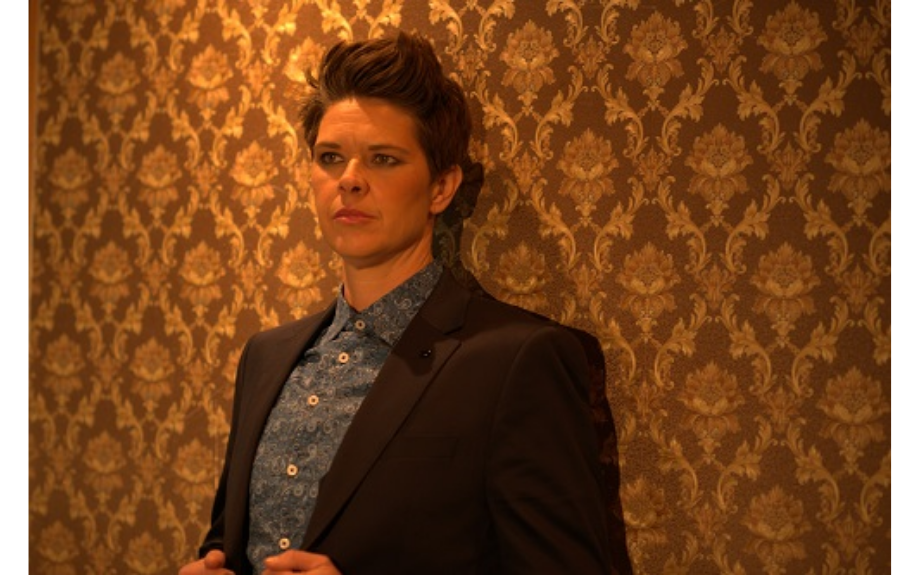
RENÉE MILLNER 'SO MUCH'
There’s so much to enjoy in the new release by Taranaki soul folk singer-songwriter Renée Millner. Her voice commands immediate attention, and her new single ‘So Much’ sits alongside confessional contemporaries Julia Jacklin, Beth Orton and Courtney Barnett – and harks back to powerful vocalists such as Tanita Tikaram and Melissa Etheridge.
There’s so much to enjoy in the new release by Taranaki soul folk singer-songwriter Renée Millner.
Her voice commands immediate attention, and her new single ‘So Much’ sits alongside confessional contemporaries Julia Jacklin, Beth Orton and Courtney Barnett – and harks back to powerful vocalists such as Tanita Tikaram and Melissa Etheridge.
“An artist who refuses to limit herself..." – Katie Brown, The May Magazine
'So Much' Single Release Show
Saturday October 9th
4th Wall Theatre, New Plymouth
7.30pm
In addition to the new single, Millner is celebrating the release of the ‘So Much’ music video, directed by videographer Hugo Eaton, and featuring Leon Crean (Taranaki Hard). Shot on the hills surrounding Mt. Taranaki, the music video takes you into a journey of connection, community and self-acceptance.
Join Renee and her fabulous band consisting of Jarrod Hooper (drums/percussion) and Matthew Mahood (bass guitar) + special guests for a soulful night of beautiful and affirming original music.
About Renée Millner
Millner is no stranger to the creative blocks and natural self-doubt that come with sharing your innermost feelings with crowds of strangers, but amongst that she’s found a lot to be grateful for. “There’s an abundance of good in the world, and it’s there all the time if we know how to receive it. And yet, so much of the time, we just aren’t aware of it.”
Which is why ‘So Much’ is not just a song of hope from a musician’s viewpoint – it’s for everyone struggling to find their place in the world.
The video for ‘So Much’, directed by Hugo Eaton, is a joy to watch. The central character, portrayed by actor Leon Crean (Taranaki Hard) struggles with a façade, and who he’s going to be when he knocks on the door to a family reunion. Before arriving, he descends into self-doubt and wipes away the make-up of his real personality.
“Don’t tell me what I should wear
How much product for my face
I got enough insecurities on my own
Won’t you tell the voices to leave me alone”
Millner explains, "I didn't set out to write an anthem about love and self-acceptance, however, it turned into me writing a conversation between the two voices in my head. The one that sometimes forgets its beauty and uniqueness, as opposed to the one who always has your back, who possesses incredible resilience. I believe that message, as cliche as it may sound, is a message of hope that young people struggling can easily relate to. And having Leon as the lead, brings those two voices to the forefront through the visual presentation of the song".
Like Millner’s recent releases, ‘Out Their Windows’ and ‘Fly Me Back’, ‘So Much’ is produced by Sam Johnson of Rhythm Ace Studios in Oakura.
Johnson says, “Artists like Renée deliver music that's from the heart, that can have a chance to mean something to other listeners, and that places a bit of value back on the idea that humans need nourishment from the music they hear.”
“Millner’s new song ‘So Much’ treats us to her soulful, goose-bump invoking voice, hopeful lyrics gliding within the tightly Sam Johnson-produced track. It…pulls at your heartstrings in true Renée fashion. This one is on repeat...." Andy Averbuch – Sound Engineer / Manager of 2017 Latin Grammy winners Flor De Toloache
Pre-save / Listen to 'So Much' on Spotify, Apple Music or Deezer.
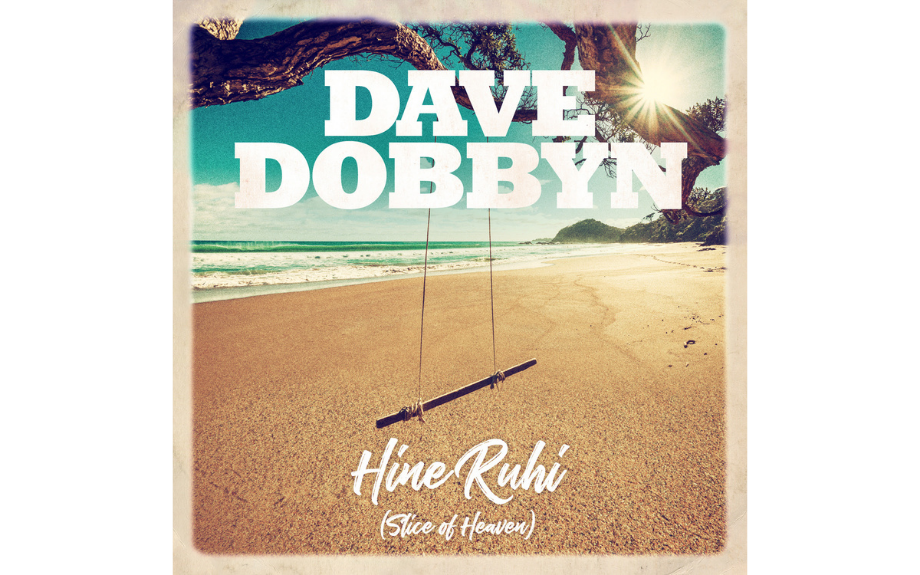
SIR DAVE DOBBYN RELEASES A NEW VERSION OF HIS CLASSIC ‘SLICE OF HEAVEN’
To coincide with the anniversary, and Māori Language Week, Sir Dave unveils ‘Hine Ruhi – Slice of Heaven’, a new recording of the song in Māori, translated by mātanga reo/language expert Hana Mereraiha. “The translation is wonderful“ says Dobbyn. “Hana Mereraiha worked skilfully on the imagery and the vocal rhythm. It was a delight working with her.”
In September, 35 years ago, Dave Dobbyn released ‘Slice of Heaven’, one of New Zealand‘s most loved and enduring songs. The single spent eight weeks at No 1 (and four in Australia) and transitioned through physical sales in 1986 to its current 40 Million streams.
To coincide with the anniversary, and Māori Language Week, Sir Dave unveils ‘Hine Ruhi – Slice of Heaven’, a new recording of the song in Māori, translated by mātanga reo/language expert Hana Mereraiha. “The translation is wonderful“ says Dobbyn. “Hana Mereraiha worked skilfully on the imagery and the vocal rhythm. It was a delight working with her.”
The waiata reo Māori will be released tomorrow, Friday, September 10 alongside a lyric video here: https://smarturl.it/DDhineruhi
Also available will be a ‘You Sing’ version of both the recording and video, with Sir Dave’s vocals removed.
“I can see school children working on their poi moves to this version. I’m inviting people to join me in learning the Māori lyrics and sing their own ‘Hine Ruhi -Slice of Heaven’. I’m hoping to be inundated with videos/ Tik Toks from kids to choirs to kapa haka. So give it your best shot and post your performances.”
Co-Producer/engineer/mixer for the recording session at Parachute Studios was Nic Manders. Ross Burge (drums and percussion) and Jo Barus (bass), Dobbyn’s long-standing rhythm section, were joined by Guy Harrison (Keys and trumpet) and JY Lee (saxophone)
Reo Coach was Hana Mereraiha, with musician and producer, Sam Taylor guiding Dobbyn through the recording session. Ruki Tobin and Taylor recorded the compelling backing vocals.
Dobbyn’s first reo Māori recording was in 2017 with ‘Nau Mai Rā - Welcome Home’, now nudging one million streams.

It’s all about THE MUSIC! SOLE rolls out the second event in their SPEAKER SERIES curated for local artists and upcoming music professionals.
With the help of the New Zealand Music Commission, SOLE Music Academy has curated a brand new music business seminar and mentoring series to support emerging Canterbury artists and upcoming music professionals. THE MUSIC is the second of 6 live music seminars, which are being held from 7-9pm at SOLE Music Academy Studio in Addington, Christchurch.
With the help of the New Zealand Music Commission, SOLE Music Academy has curated a brand new music business seminar and mentoring series to support emerging Canterbury artists and upcoming music professionals. THE MUSIC is the second of 6 live music seminars, which are being held from 7-9pm at SOLE Music Academy Studio in Addington, Christchurch.
Each 2hr event has one specific topic and three of the country's leading music industry professionals who will cover everything you need to know about how to make and release your music successfully. Attendees are encouraged to come to all of the events and to make the most of the rare opportunity to book in 1:1 private mentoring sessions the following day.
In this specific event, attendees will hear from 3 of New Zealand’s top songwriters and producers Devin Abrams (Shapeshifter, Drax Project & Pacific Heights), Will McGillivray (nomad, There’s a Tuesday & BEXY) & prolific songwriter and award winning artist, Mel Parsons.
Together they will delve into their process of how they create and produce music for themselves and other artists. They will also give attendees a better understanding of how to create a song that is release worthy and ensure you get more people listening to your music.
We have limited tickets for THE MUSIC only 40 due to the Level 2 regulations. We also have a very limited TICKET BUNDLE where you can go to all five events for only $50 and you receive a free merch bag!
More information and links to the events are here. Tickets only $15 +BF -
THE MUSIC - September 20th - Tickets
THE IMAGE - October 4th - Tickets
THE BUSINESS - October 11th - Tickets
THE RELEASE - November 8th - Tickets
THE SHOW - November 29th - Tickets
SPECIAL TICKET BUNDLE - All 5 events for only $50 plus a merch bag worth $25 - Ticket
The first event was excellent and the mentoring sessions were all booked up straight after the event so get in quick and book before!

Waiata Maori Music Awards postponed, Waiata Māori Iconic Award recipients for 2021 announced
Kia ora koutou katoa. The organisers of the National Waiata Māori Music Awards have had to make the tough decision yet again to move the 2021 event online, with safety of the people being priority. He waka eke noa!
Kia ora koutou katoa. The organisers of the National Waiata Māori Music Awards have had to make the tough decision yet again to move the 2021 event online, with safety of the people being priority. He waka eke noa!
Announcing the Waiata Māori Iconic Award recipients 2021 and that WMMA will be going online!
Organisers of the National Waiata Māori Music Awards have had to make the tough decision yet again to move the 2021 event online, with safety of the people being a the priority.
It comes after the Government announced Auckland will stay at alert level 4 for now while the rest of the country, south of Tāmaki will soon go to level 2. The awards event was due to be held on Friday 10th September in Hawke’s Bay. Traditionally, a large number of guests and finalists would come from all over Aotearoa, as well as some from overseas to celebrate our award recipients.
This year we announce two of our iconic award recipients, former politician, educator and kapa haka exponent Tā Pita Sharples is this year’s recipient of the Waiata Māori Awards “Te Tohu Kaitiaki Tikanga Pūoru - Keeper of Tradition” iconic award.
The award recognises Tā Pita’s lifelong contribution to the retention and promotion of traditional waiata, through not only education but also in his role establishing and leading Tāmaki based kapa haka Te Roopū Manutaki which he set up in 1968.
Waiata Māori Awards executive director Ellison Huata says Tā Pita has shown tremendous leadership throughout the years and for over half a century has provided young urban Māori a haven to celebrate cultural identity.
“To honour Tā Pita this year at the Waiata Māori Awards is a celebration of his dedication and love of all things Māori. Te Roopū Manutaki has given Aotearoa a wealth of iconic waiata Māori and his nomination was well supported.”
Tā Pita of Ngāti Kahungunu, Ngai Te Kikiri o te Rangi and Ngāti Pahauwera was brought up in Waipawa and educated at Takapau Primary, Waipukurau District High School and Te Aute College. He led the establishment of intertribal marae Hoani Waititi in West Auckland and founded the country’s first kura kaupapa Māori in 1985.
Among his list of achievements includes the creation of the New Zealand National School of Māori Weaponry, the Race Relations Office Chief Executive Officer from 1972, 1980 and 2000, He Tohunga Toi Huarewa o Te Wānanga Whare Tapere o Takitimu, Māori Party co-leader from 2004 to 2013 and is a member of the Ngāti Kahungunu iwi Taumata.
Joining Tā Pita this year in receiving an iconic award is singer Che Fu who is the recipient of this year’s Te Tohu o te Ahumahi Pūoru - Music Industry Award which celebrates success and contribution to music.
Che Fu, a founding member of the band Supergroove, rose to fame when he featured on DLT’s production of number one hit 'Chains'. As a solo artist, he has sold thousands of albums both in New Zealand and internationally. His first three studio albums received platinum and gold sales and produced hits that have become entrenched into New Zealand song history.
Che Fu is of Tainui and Ngāti Raukawa descent on his mother Miriama Rauhihi Ness’ side and Niuean on his father Tigilau Ness’ side, Che Fu is relentless in his dedication to taking music to the country.
Ellison Huata says recognising Che and Tā Pita’s contribution to Māori music is a wonderful end to Māori Music Month. There will still be an awards event for 2021, to acknowledge all recipients but there will be an online version, to be held at the later date of October 9.
“We plan to run it as an online, virtual event but still have a presence at Toitoi - Hawke's Bay Arts & Events Centre, the venue where we planned to run the awards event this year.”
Ellison said it would be a mixture of pre-recorded material and live performances for the virtual event which will be streamed online.
“We know a lot of people will be disappointed, we wanted this year’s awards event to be a positive way to bring people through the challenges of 2020 & 2021. We still want people to tune in to watch this year’s awards event, to recognise and celebrate the achievements of our Māori singers, songwriters and performers."